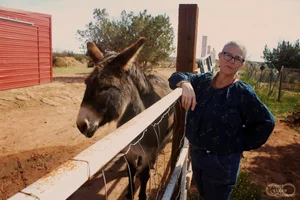
I’m using my milk to make cream cheese. You can try it this weekend at the Ranch Market!
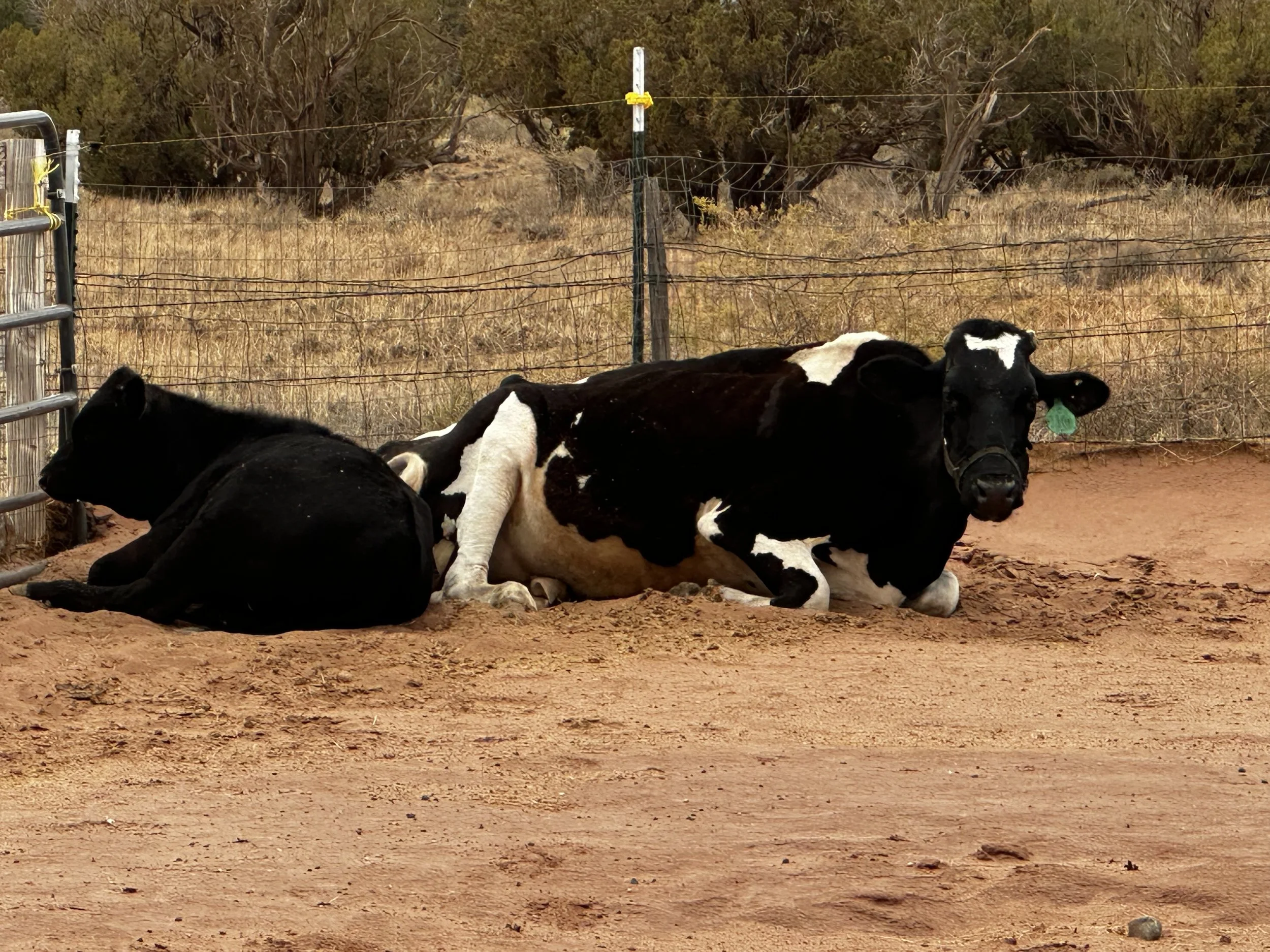
“Beefcake” the steer calf with “Pretty Cow”- taking a rumination rest after eating
Having a milk cow means you hardly ever run out of milk! It also means you need creative methods to use milk that isn’t consumed or sold too.
I have wheels of semi-hard cheeses like gouda and Monterey Jack curing in wax that won’t be ready for another couple of months. My favorites, though, are the acid added, heat coagulated cheeses like ricotta, fromage blanc, mozzarella and cream cheese that can be eaten the same, or next day. I also love making Greek (drained) yogurt and kefir for a quick return on my milk.
Have you ever made cheese? Ever wanted to learn? The process can be simple or complicated, but the most important part is impeccably clean workspace, pots and tools with an accurate thermometer. I use various sizes of stainless steel stock pots for making cheese. I started with a floating dairy thermometer years ago, then got a stainless dial type that hooks on the edge of the pot with a clip. Now I have a digital thermometer with a probe & can dangle into the milk as it heats, as well as an infrared gun type that gives me an accurate surface temperature.
I use a digital pH meter to check the acidity of the milk once I have added the culture and rennet to determine when to “cut the curds” and begin the draining process. The whole coagulation process is like magic to me. One minute you have a pot full of warm milk, then the whole pan starts to solidify and float in the “whey” that develops in the process. Before I got the pH meter, I used the clarity of the whey to tell when to cut the curds; when it became clear yellow it was time!
I use a long stainless steel knife to manually make vertical cuts in the curd. The cheese recipe tells you how big the cuts should be- 1”, ½” , ¼” and so on. When the curds have been cut to the correct size, they will be ladled into a colander lined with cheesecloth that has been dipped into the whey. The cheesecloth corners are tied and the cheesecloth full of curds suspended to drain- the longer the draining time, the dryer the curds. For firm to hard cheeses, the curds are placed into a mold lined with whey-moistened cheesecloth and drained under pressure. The wheel is turned several times, increasing the weight with each rotation, then it might be brined in a salt water solution, air dried and then waxed or not while it ages at 55 degrees in a humid environment.
My favorite cheese reference book is “Mastering Artisan Cheesemaking: The Ultimate Guide for Home-scale and Market Producers” by Gianaclis Caldwell. The first half of the book is the history and science of cheesemaking, the second half is the different types of cheeses with recipes. If you have a milk cow or goats, this book will help you create cheeses your family will love.
Today I used a little over 2 gallons of whole milk (with a high fat content) to start a batch of cream cheese. A butterfat content of 5-11.5% is needed to make this. I heated the milk to 86%, removed from the heat and added Flora Danica culture dissolved in ¼ cup of cool water. The milk sat with the culture for 5 minutes before gently stirring to combine. Next I added 5-6 drops of single-strength rennet in 2 tablespoons of cool water and gently stirred again. The addition of calcium chloride is needed if you are using store bought, pasteurized milk. The pot of cultured milk was then placed into a big styrofoam shipping container with a towel in the bottom, 4 half-gallon jars filled with hot water are placed around the pot to keep the temperature at 72 degrees, and everything is wrapped and covered with towels before placing the lid onto the styrofoam base. The milk will ripen and coagulate over 12-24 hours. When the pH of the curd is 4.6-4.7, the curds will be cut to ½” vertically , then drained in the whey-soaked cheesecloth in a colander, hung to continue draining to desired texture for 4-6 hours. While it is soft, I will add flavorings to some of the mass, like herbs and garlic, everything bagel seasoning, freeze-dried fruit powders, then packaged into 8 ounce deli containers with lids and refrigerated. The cream cheese is good for 3 weeks in the fridge.
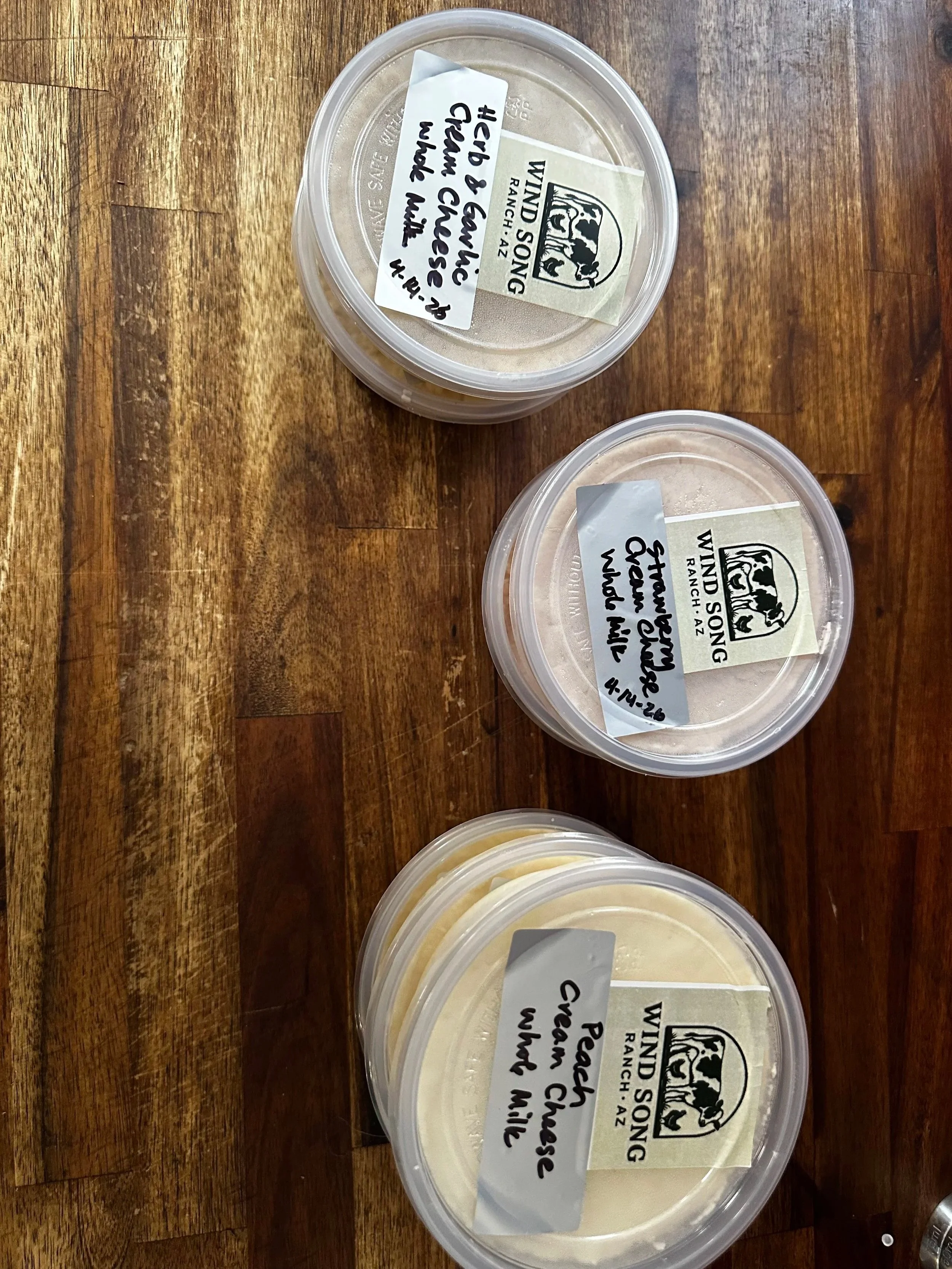
Three flavors of whole milk cream cheese.
My cream cheese does not have any emulsifiers to change the character and make it smoother. Raw milk, Flora Danica culture, vegetable rennet and salt form the cheese. After draining the curd, I divided the curd and added organic garlic and herbs to one batch, organic freeze-dried strawberry powder to another, and organic freeze-dried peach powder for the last batch. I added a little fresh cream to each to smooth it out- a better choice than chemicals!
Today I will make ricotta from another 2 gallons of milk with citric acid and heat to coagulate. There is nothing better than warm, fresh ricotta! Thursday, I will make American style cottage cheese with added cream from another 2 gallons of milk. I will have samples of each of this week’s cheeses at Saturday’s market. I’m also baking some cream scones for Saturday. Hope to see you at the ranch!