Garden Prep to Do Now
I know, the full moon was this past week. I’m always planning things in my head for the next growing season. What can I do to help make my soil healthier?
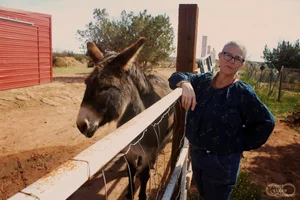
Some people ask why I still have horses, cows, and chickens at my age. “Free Fertilizer,” I tell them, Tongue in cheek! It’s a valuable investment in keeping the soil in my gardens and orchard healthy and suitable for what I plan to grow. When we first moved here, I tilled in manure for 2 years before ever planting a thing!

No-till, raised beds do not have permanent side walls. The center row has fine mesh netting to protect from insects, the row to the right has Agrabon 30, taht only block 30% of he sunlight, provides protection from frost, snow and wind.
The photo above was from springtime, when we have sustained, high wind that seems to last FOREVER! Using a no-till raised bed system and T-Tape for focused irrigation, along with protective measures like row covers, I can get things into the ground earlier (and later) than other farmers who just plant seeds in the ground without the protection.
Here’s how I set up my garden beds:
I use 30 inch wide rows that are separated by 2 foot walkways, covered with landscape fabric and secured with landscape staples. You can use wood chips, straw, old feed sacks and cardboard for your walkways. I got a really good deal on 2 rolls of landscape fabric a couple of years ago so all I had to buy after that was the staples; I use 6” staples ever 10-12 inches to keep the walkways in place.
I mixed equal parts native soil with old, well rotted manure and a wheelbarrow to start building up the rows. Dump, level, add more and repeat. This past season, I got a dumptruck load of old pig compost that I topped all my beds with after sifting our stones, etc. Once I had about a 6-8 inch layer of composted soil in place, nicely leveled, I used the back of my garden rake to compact the edges at a high angle.
The next step is to measure out enough T-Tape to have at least 2 rows of drippers for each row and planting space on either side of the irrigation tape. The emitter side should be up towards the sun, otherwise it will get clogged with soil and not work.
I use companion and succession planting when deciding what to plant and how much to plant in each row. For example, my winter garden had two rows of garlic with 2 different types- the north end of the row had a German hardneck garlic, while the south end has an Italian purple garlic. In the spring, I will plant looseleaf lettuces between the rows of garlic. As the lettuce grows quickly, I can replant more as I harvest throughout the spring, keeping it protected with a row cover.
I check soil moisture with my fingers. but generally do a deep watering every other day in the spring, and daily when it gets hot. Don’t overwater! There is a tool that check soil moisture and pH, but I haven’t invested in one yet!
In the autumn, I let things go wild so bees and birds have a nursery and playground in the weeds that always take over. When I’m ready to start building up the beds again, I just chop the dead weeds over and add manure and compost over the top. The weeds will decompose and also help build up my soil.
In early spring, I collect soil samples from each of the gardens to do a soil test. Every couple of years I send samples off to an agricultural lab for analysis to see if I need to add anything for a successful growing season or not. On in between years, I use a home soil testing kit and add supplements as needed.
By the way, I have a limited amount of old, composted manure available if you don’t have “Free Fertilizer” at your place… You can bring a bucket or feed sack and fill with a shovel. If you want more than a bucket or two, contact me so I can let you know the cost for loading larger quantities.
What have you been doing to get ready for gardening?